
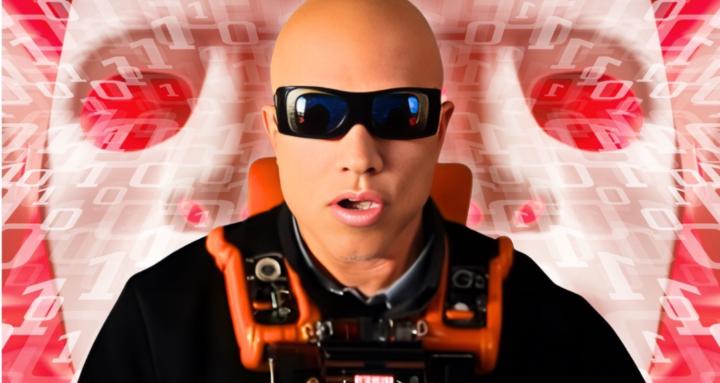


Elmer Locker Jr – This World is a Simulation: A Deep Exploration of Reality, Consciousness, and Human Existence
The concept that reality may not be what it appears has fascinated philosophers, scientists, and spiritual thinkers for centuries. In Elmer Locker Jr – This World is a Simulation, readers are introduced to a compelling perspective that challenges conventional assumptions about existence, consciousness, and the nature of the universe itself.
The simulation theory has evolved from a fringe philosophical concept into one of the most discussed ideas in modern intellectual discourse. By combining elements of science, metaphysics, technology, and human perception, this work encourages readers to question whether the world around them is genuinely physical or part of a larger programmed reality.
This exploration delves into the major themes, philosophical foundations, and implications presented throughout the work while examining why the simulation hypothesis continues to captivate people around the globe.
Understanding the Simulation Hypothesis
The simulation hypothesis proposes that our perceived reality may actually be an artificial environment created by an advanced intelligence. Rather than existing in a purely physical universe, humanity could be operating inside a highly sophisticated simulation designed by a civilization far more technologically advanced than our own.
At first glance, this idea may sound like science fiction. However, advances in computing power, artificial intelligence, virtual reality, and quantum mechanics have prompted serious discussions among philosophers and scientists regarding the possibility.
The theory raises fundamental questions:
- What is reality?
- How do we know what is real?
- Is consciousness independent of physical matter?
- Could our universe be a programmed construct?
These questions form the foundation of the simulation debate and inspire deeper contemplation about humanity’s place in existence.
The Nature of Reality
One of the central themes explored is the distinction between perception and reality.
Human beings experience the world through their senses. Everything we know about the universe comes through sight, sound, touch, taste, and smell. Yet history demonstrates that our senses can be deceived.
Optical illusions, dreams, hallucinations, and altered states of consciousness reveal that perception does not always correspond directly with objective reality.
If our understanding of existence relies entirely on sensory input, how can we be certain that what we experience is the ultimate truth?
The simulation perspective suggests that reality may be a carefully generated experience rather than an independently existing physical world.
Consciousness and Awareness
Another significant aspect of the discussion centers on consciousness.
Scientists continue to debate the origins of conscious experience. Despite extraordinary advances in neuroscience, there remains no universally accepted explanation for why awareness exists.
The simulation framework introduces an alternative perspective. Consciousness may not simply emerge from biological processes. Instead, awareness could be a fundamental element within the architecture of reality itself.
This possibility transforms how we view human existence. Rather than being accidental products of evolution alone, conscious beings may serve a larger purpose within the structure of the simulated environment.
Such ideas encourage readers to think beyond conventional materialistic explanations and explore broader interpretations of awareness and identity.
Technology and the Future of Simulated Worlds
Modern technology provides some of the strongest arguments supporting simulation discussions.
Virtual reality systems already allow users to enter immersive digital environments. Video games continue to evolve toward increasingly realistic experiences. Artificial intelligence demonstrates growing capabilities that were once considered impossible.
As computing power expands, humanity moves closer to creating worlds populated by intelligent digital entities.
This progression leads to an intriguing question:
If future civilizations can create simulations containing conscious beings, what are the chances that our own reality is the original one rather than a simulation created by another intelligence?
The statistical implications of this argument have become one of the most frequently cited reasons for considering the simulation hypothesis seriously.
The Connection Between Science and Philosophy
The simulation concept exists at the intersection of science and philosophy.
Scientific discoveries in quantum physics have revealed behaviors that challenge traditional assumptions about reality. Certain phenomena appear dependent upon observation, while others suggest that information may play a more fundamental role in the universe than previously believed.
Philosophy contributes another layer to the discussion by addressing questions that science alone cannot answer:
- What constitutes existence?
- What defines consciousness?
- Can reality ever be objectively verified?
The blending of scientific inquiry and philosophical reasoning creates a rich intellectual framework through which readers can explore these profound mysteries.
Free Will in a Simulated Universe
A common concern surrounding simulation theory involves free will.
If reality is programmed, do individuals truly possess the freedom to make choices?
Several interpretations exist:
Deterministic View
According to a deterministic model, every event follows predefined rules. Human choices may simply be outcomes generated by underlying programming.
Probabilistic View
Another possibility suggests that simulations incorporate randomness and probability, allowing genuine unpredictability within the system.
Conscious Agency View
Some theorists argue that conscious entities maintain authentic decision-making abilities regardless of whether their environment is simulated.
The question remains unresolved, yet it encourages meaningful reflection about personal responsibility, destiny, and human autonomy.
Spiritual Perspectives and Simulation Theory
Many readers notice similarities between simulation concepts and ancient spiritual traditions.
Throughout history, religious and mystical teachings have suggested that physical reality may represent only a small portion of a much larger truth.
Certain traditions describe existence as:
- An illusion
- A dream-like state
- A temporary experience
- A learning environment
While simulation theory emerges from modern technological thinking rather than ancient spirituality, both perspectives often arrive at surprisingly similar conclusions regarding the limitations of ordinary perception.
This overlap contributes to the theory’s widespread appeal among individuals interested in both science and spirituality.
The Search for Evidence
An important aspect of the simulation discussion involves the search for evidence.
Researchers have proposed various methods for detecting potential signs of artificial reality.
Some ideas include:
Computational Limits
A simulated universe might possess measurable limitations similar to the processing constraints found in computer systems.
Mathematical Patterns
Reality could contain hidden mathematical structures indicating underlying programming.
Quantum Anomalies
Unexpected behaviors within quantum systems may reveal clues about the fundamental architecture of existence.
Information-Based Reality
Some theories suggest that information rather than matter serves as the primary building block of the universe.
Although definitive proof remains elusive, ongoing scientific exploration continues to generate new questions and possibilities.
Human Purpose and Meaning
One of the most compelling elements of the simulation concept is its impact on meaning and purpose.
Critics sometimes argue that simulated existence would diminish life’s significance. However, others reach the opposite conclusion.
Even within a simulated environment:
- Relationships remain meaningful.
- Experiences remain real to participants.
- Growth and learning retain value.
- Moral choices continue to matter.
Whether reality is physical, digital, or something entirely different, human experiences maintain profound importance from the perspective of those living them.
This interpretation allows readers to find purpose regardless of the ultimate nature of existence.
Skepticism and Criticism
Not everyone accepts simulation theory.
Critics raise several objections:
Lack of Direct Evidence
No conclusive proof currently demonstrates that reality is simulated.
Technological Assumptions
The theory relies on assumptions about future technological capabilities that may never materialize.
Infinite Regress Problem
If our universe is simulated, what created the universe containing the simulators?
Philosophical Challenges
Some philosophers argue that simulation theory merely shifts questions about reality rather than answering them.
These criticisms play an essential role in maintaining balanced discussion and encouraging rigorous analysis.
Why the Theory Continues to Fascinate People
The enduring popularity of simulation concepts stems from their ability to combine multiple fields of inquiry.
The theory intersects with:
- Physics
- Computer science
- Artificial intelligence
- Neuroscience
- Philosophy
- Spirituality
- Cosmology
Few ideas manage to connect such diverse disciplines while simultaneously challenging fundamental assumptions about existence.
As technology advances and scientific understanding expands, public interest in simulation discussions is likely to continue growing.
Lessons and Insights
Regardless of whether reality is ultimately simulated, the exploration itself provides valuable lessons.
Readers are encouraged to:
- Question assumptions.
- Think critically.
- Explore multiple perspectives.
- Remain open to new possibilities.
- Seek deeper understanding of consciousness and existence.
The greatest value of simulation theory may not lie in proving a particular conclusion but in inspiring curiosity and intellectual exploration.
Final Thoughts
Elmer Locker Jr – This World is a Simulation presents a fascinating examination of one of the most intriguing ideas in modern thought. By challenging traditional beliefs about reality and encouraging readers to explore profound philosophical questions, the work serves as both an intellectual journey and a catalyst for deeper reflection.
Whether one views the simulation hypothesis as a scientific possibility, a philosophical thought experiment, or a metaphor for human perception, its influence on contemporary discussions about consciousness and existence cannot be ignored.
The questions raised throughout the work remain among humanity’s most significant mysteries. What is reality? Why are we here? And how much of what we experience represents the true nature of existence?
While definitive answers may remain beyond our reach, the search itself continues to inspire discovery, wonder, and a deeper appreciation for the extraordinary complexity of the universe we call home.
Recommended Reading: If you enjoy exploring consciousness, reality, and advanced philosophical concepts, consider related works on artificial intelligence, digital civilizations, and future technologies. These subjects provide valuable context and deeper insight into the ideas discussed throughout this thought-provoking work.
Explore More: Readers interested in emerging technologies, AI-driven innovation, and future-focused learning may also benefit from advanced courses covering artificial intelligence, machine learning, and digital transformation.
Continue Learning: Expanding your understanding of technology, philosophy, and human consciousness can provide a richer perspective on the questions raised by simulation theory and the evolving relationship between humanity and intelligent systems.
